

Table of Contents
- What to Look for in a Personal Injury Attorney
- Questions to Ask During a Personal Injury Attorney Consultation
- How to Check Attorney Disciplinary Records and Credentials
- Understanding How Much Personal Injury Lawyers Charge
- Red Flags When Selecting a Personal Injury Attorney
- Why Local Experience Matters for Your Injury Claim
- Your Vetting Checklist Before Hiring
Last Updated: August 16, 2026
What to Look for in a Personal Injury Attorney
A strong personal injury attorney becomes your advocate during one of the most stressful periods of your life. Start by looking for experience in your specific type of injury claim. Someone who specializes in slip-and-fall claims may lack the nuance needed for a complex workers’ compensation dispute. Ask how many cases similar to yours the attorney has handled, not just total cases.
Next, assess how accessible the attorney actually is. Many firms promise direct access to attorneys, but you’ll speak to an assistant every time you call. When you’re dealing with pain, medical appointments, and insurance company pressure, you need to reach someone who understands your case without explaining everything from scratch each time.
Look for evidence of real results. Settlements and verdicts speak louder than marketing claims. A firm that has recovered substantial compensation for clients in situations like yours shows they know how to negotiate with insurance companies effectively. Ask for specific examples, not just general statistics.
Finally, evaluate the attorney’s communication style. A good personal injury attorney explains complex concepts in plain language. If you don’t speak English as your first language, you need assurance that the firm communicates clearly without making you feel lost or confused.
Questions to Ask During a Personal Injury Attorney Consultation
The consultation is your chance to interview the attorney before hiring them. Come prepared with specific questions that reveal how they’ll handle your case.

Start with their experience: "How many cases like mine have you handled?" Listen for specifics. You want to hear "I’ve handled forty truck accident cases in the past three years, with an average settlement of $250,000," not vague answers like "hundreds of cases."
Ask about their fee structure directly: "How much do personal injury lawyers charge, and what does your fee include?" Most personal injury lawyers work on contingency, meaning they take a percentage of your settlement or verdict. But the percentage varies, and what’s included differs. Some cover all costs; others pass certain expenses to you. You need to understand this before signing anything.
Ask about communication: "Will I speak directly to you, or will I be passed to an assistant?" Get a clear answer about how often you’ll hear from them and through what channels.
Inquire about their approach: "Based on what I’ve told you, what do you think my case is worth, and how would you approach it?" A good personal injury attorney will give you a realistic range and explain their strategy.
Ask about medical coordination: "Do you help coordinate with doctors and manage my medical care, or is that something I handle alone?" This affects your recovery process.
Finally, ask about their track record: "Can you tell me about a recent case similar to mine and what the outcome was?" Specific examples matter more than general claims.
How to Check Attorney Disciplinary Records and Credentials
Before you hire anyone, verify they’re actually who they claim to be. This protects you from unethical practitioners.
Start with the state bar association. Every licensed attorney must be registered with their state’s bar, and disciplinary records are public. Search the Illinois State Bar Association attorney database to confirm the attorney is in good standing. This search will show any disciplinary history, sanctions, or complaints. A pattern of complaints about the same issue suggests a real problem.
Check for certifications and recognition. Look for board certification in personal injury law if relevant to your case. The American Board of Certification for Trial Advocates maintains a directory of certified specialists. Recognition from organizations like Super Lawyers indicates peer recognition.
Verify their education and bar admission through the state bar. If an attorney claims extensive experience but was admitted to the bar five years ago, something doesn’t add up.
Look for any licensing issues in other states. A suspension or disbarment in one state is a serious warning sign.
Ask for references from past clients. When you speak with references, ask specific questions: Did the attorney communicate regularly? Did they explain the process clearly? Were they satisfied with the outcome?
Finally, check online reviews, but look for patterns. If dozens of reviews mention poor communication or unmet promises, that’s meaningful. If reviews consistently praise the attorney’s accessibility and results, that’s a positive signal.
Understanding How Much Personal Injury Lawyers Charge
Most personal injury lawyers work on a contingency fee basis. They don’t charge an upfront fee; instead, they take a percentage of your settlement or verdict. This aligns their interests with yours: they only make money if you win. The specific percentage typically ranges from 25% to 40%, depending on firm and case complexity.
Understanding how much personal injury lawyers charge also requires knowing what’s included. Some firms cover all costs, expert witnesses, medical records, court filing fees, investigation expenses. Others pass certain costs to you, either upfront or from your settlement. Before hiring, ask for a written fee agreement that spells out exactly what percentage the firm takes and what costs you’re responsible for.
There’s an important distinction between the contingency fee and costs. If your case settles for $100,000 and your attorney takes 33%, you owe them $33,000. But if the firm incurred $5,000 in costs, those come out separately. In many cases, costs are deducted from the settlement before the contingency fee is calculated. This matters, it affects how much you actually take home.
Ask about how the firm handles cases that don’t result in a settlement or verdict. If your case goes to trial and you lose, the attorney doesn’t get a fee, but you may still owe costs. Some firms absorb costs on unsuccessful cases; others don’t.
Don’t automatically choose the firm with the lowest percentage. A cheaper contingency fee from an attorney who doesn’t fight hard could cost you far more in the long run. A firm that takes 35% but recovers significantly more might leave you with more money than a firm charging 25% but settling too quickly.
Red Flags When Selecting a Personal Injury Attorney
Certain warning signs should make you pause before hiring.
The biggest red flag is an attorney who makes unrealistic promises about your case. If someone guarantees a specific settlement amount or promises you’ll win, they’re either lying or they don’t understand the legal system. No ethical attorney guarantees outcomes.
Watch out for attorneys who pressure you to sign immediately or who seem more interested in signing you than understanding your case. A good personal injury attorney takes time to learn your situation.
Be wary of firms that don’t clearly explain their fee structure. If you ask how much personal injury lawyers charge and the answer is vague or confusing, walk away. You should have a clear written agreement.
Another warning sign is lack of accessibility. If you can never reach anyone or are always passed to an assistant who doesn’t know your case, that’s how it will be throughout your representation.
Pay attention to how the attorney talks about other lawyers or insurance companies. You want someone who fights hard but maintains professional relationships that allow them to negotiate effectively.
Be cautious about attorneys who focus heavily on how much they’ve recovered in past cases. While results matter, using past recoveries as the main selling point can indicate they’re more interested in marketing than in your individual case.
Finally, watch for poor communication or disorganization. If the firm’s office is chaotic or paperwork is disorganized, that suggests the same chaos will follow your case.
Why Local Experience Matters for Your Injury Claim
A personal injury attorney with deep local experience brings advantages that an out-of-state lawyer simply can’t match.
Local attorneys understand the specific judges who will hear your case. Different judges have different approaches to personal injury claims. A local personal injury attorney knows these tendencies and adjusts strategy accordingly.
Local connections matter too. A personal injury attorney who has practiced in your area for years has relationships with medical experts, investigators, and other professionals who support injury claims. These relationships often result in better expert testimony and more credible presentations.
Understanding local medical standards is another advantage. A local attorney knows which hospitals and doctors are respected in your area and understands typical medical care costs locally. This affects how they value your claim and negotiate with insurance companies.
Local experience also means familiarity with specific insurance companies operating in your area. A local attorney knows how that company typically handles claims and what their settlement patterns are.
Perhaps most importantly, a local attorney understands the specific regulations and legal nuances in your state. Illinois has its own specific rules about personal injury claims, and an attorney licensed in Illinois knows these rules inside and out.
Your Vetting Checklist Before Hiring
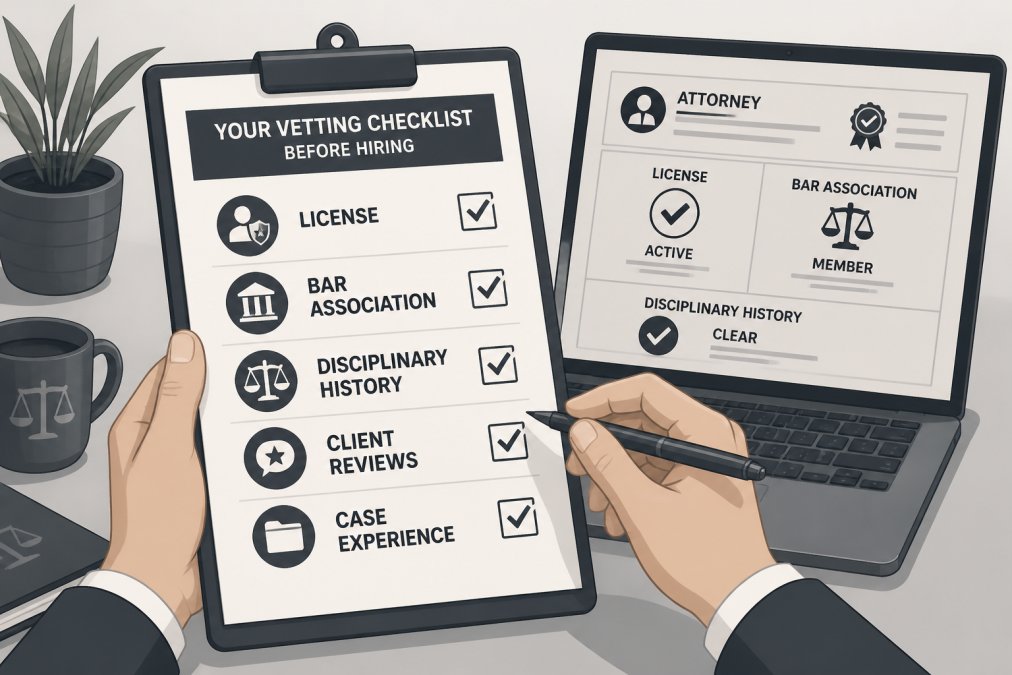
Before you sign anything, work through this checklist to ensure you’ve asked the right questions and verified the key facts.
Experience and Specialization:
- Attorney has handled at least 20 cases similar to yours in the past 5 years
- Attorney specializes in your type of injury claim
- You have specific examples of recent cases with outcomes
Credentials and Standing:
- Attorney is in good standing with the state bar
- No disciplinary history or pattern of complaints
- License is current and active in your state
Communication and Accessibility:
- Attorney or someone you speak with can be reached 24/7 for emergencies
- You have a clear understanding of how often you’ll hear updates
- Attorney explains concepts in language you understand
Fee Structure:
- Contingency fee percentage is clearly stated in writing
- You understand what costs are covered and what you’re responsible for
- Fee agreement is provided in writing before you sign
Case Strategy:
- Attorney has explained their approach to your case
- Attorney has given you a realistic estimate of your claim’s value
- Attorney has discussed whether settlement or litigation is likely
Support Services:
- Firm offers medical referral coordination if needed
- You understand what you’re responsible for managing versus what the firm handles
References and Results:
- You’ve spoken with at least one past client reference
- You’ve verified at least one recent case result
- Online reviews show consistent positive feedback
Gut Check:
- You feel comfortable with this attorney
- You believe they have your best interests in mind
- You don’t feel pressured or rushed into a decision
If you can’t check every box, keep looking. You’re making a significant decision, and you deserve an attorney who meets these criteria.
Finding the right personal injury attorney means balancing experience, accessibility, and trust. The stakes are high, your recovery and financial future depend on having competent legal representation. Marker Law brings over 25 years of experience handling injury claims, offering direct access to attorneys who understand your situation and fight for the compensation you deserve. When you’re injured and overwhelmed, you need a legal team that handles the pressure so you can focus on healing. Start with a free consultation to discuss your case and see if Marker Law is the right fit for your recovery.
Frequently Asked Questions
What questions should I ask during a free personal injury attorney consultation?
Ask about the attorney's experience with cases similar to yours, how they handle communication with clients, their fee structure and whether they work on contingency, expected timeline for your claim, and how they approach settlement negotiations versus litigation. Also ask about their track record securing compensation and whether you'll work directly with the attorney or be handed off to staff. These questions reveal whether the attorney prioritizes your needs and understands your specific injury situation.
How do I verify an attorney's disciplinary record?
Contact the Illinois Attorney Registration and Disciplinary Commission (IARDC) or visit their website to search an attorney's disciplinary history. You can also check the State Bar of Illinois directory for licensing status and any public complaints. These official sources show whether an attorney has faced ethics violations, suspensions, or other disciplinary actions. A clean record is essential; any history of complaints should raise concerns about how they handle client matters.
How much do personal injury lawyers typically charge?
Most personal injury attorneys work on contingency fee arrangements, meaning they take a percentage of your settlement or verdict instead of charging upfront fees, typically 25-40% depending on whether the case settles or goes to trial. You pay nothing unless you win. However, you may be responsible for case expenses like medical record retrieval, expert witness fees, and court filing fees. Always clarify the exact fee structure and what costs you'll owe during your free consultation.
What makes a personal injury attorney reliable and trustworthy?
A reliable attorney has substantial experience handling cases like yours, maintains clear communication and returns calls promptly, works on contingency so their interests align with yours, can explain your legal options in plain language, and has a proven track record of securing fair compensation. They should provide a free case evaluation, answer your questions thoroughly, and never pressure you into decisions. Check their credentials with the bar association and read client reviews to confirm they deliver on their promises.
This article was written using GrandRanker